

Los Angeles City Hall (Photo: Evan Symon for the California Globe)
The Homeless Money Machine Just Lost Its Plug
HUD shuts off a billion-dollar bureaucracy that couldn’t prove its own houses exist
By Jay Rogers, June 14, 2026 6:53 am
I’ve lived in Southern California since 1990. I arrived when the state had a vibrant economy and a functioning government. Over 35 years, I’ve watched Los Angeles spend its way into a homelessness crisis that keeps getting worse no matter how many zeroes follow the dollar sign. This week, somebody in Washington finally said enough.
The U.S. Department of Housing and Urban Development suspended all federal funding to the Los Angeles Homeless Services Authority — LAHSA — the joint city-county agency that has led the region’s homelessness response since the 1990s. The charges are federal grade: fraud, financial mismanagement, fabricated certifications, and conflicts of interest so obvious that a federal judge had already called them ‘obvious fraud’ on the record. HUD’s Inspector General is now formally investigating. The only surprise is that it took this long.
Here’s what the money actually bought. LAHSA received nearly $1 billion in federal Continuum of Care dollars over the past five years — with roughly $200 million flowing in last year alone. Its total operating budget this fiscal year sits at $828 million, with the city and county kicking in the majority. Over that same five-year window, HUD claims homelessness in Los Angeles increased 100% — a figure LAHSA disputes but has yet to credibly refute. A billion dollars in. A 100% increase out. That’s not a funding problem. That’s a racket.
The audit trail reads like something straight out of The Sopranos, except Tony Soprano kept better books. LAHSA failed to record when people left the motel housing it was paying for. It applied federal money to services already covered under separate contracts. It couldn’t produce documentation proving the existence of housing sites it was supposedly managing. A court-ordered review in March 2025 — conducted by independent firm Alvarez & Marsal at the direction of U.S. District Judge David O. Carter — found the agency could not account for $2.3 billion in homelessness spending. Not misallocated. Not delayed. Gone. And despite certifying to federal regulators for years that it had a conflict-of-interest policy in place, LAHSA didn’t formally adopt one until September 26, 2025. Those were false certifications to the federal government. That’s not sloppiness. That’s fraud.
Then there’s the CEO situation, which is almost too brazen to believe. Former chief executive Va Lecia Adams Kellum signed contracts directing $2.1 million in federal funds to a nonprofit where her husband held a senior leadership position — without disclosing the relationship to HUD. She resigned. LAHSA called it an inadvertent mistake. Gordon Gekko would call it amateur hour. Federal auditors are calling it a conflict of interest. I’ve testified in fiduciary cases where far fewer people got sued into oblivion.
HUD Secretary Scott Turner put it plainly: ‘Year after year, hundreds of millions of taxpayer dollars were funneled to LAHSA with little accountability. Meanwhile, homelessness skyrocketed. Taxpayers will no longer bankroll an organization that puts its own self-interests ahead of the Americans it was created to serve.’ California’s political class has been doing exactly that for thirty years, and it took a federal funding cut to say so out loud.
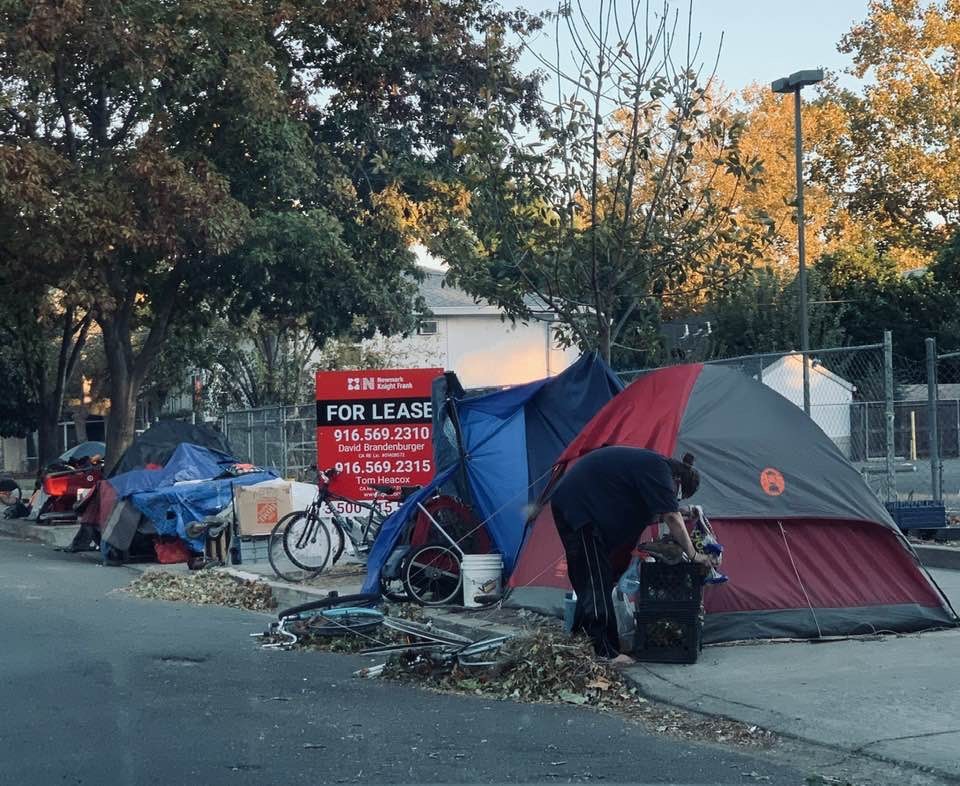
The term ‘homeless industrial complex’ gets dismissed as conservative shorthand. It describes a system rewarded for managing a problem rather than solving it. Agencies expand. Nonprofits multiply. Consultants bill. Contractors renew. And the encampments keep spreading. Los Angeles County spent roughly $1 billion on homelessness in fiscal year 2023-24 — about $30,000 per homeless person per year before stacking federal dollars, Medi-Cal, and food assistance on top. California spent $24 billion over five fiscal years and watched the population grow.
The local political reaction has been equal parts predictable and insulting. Mayor Karen Bass issued a statement expressing ‘grave concerns’ about LAHSA’s mismanagement — the same Mayor Bass whose office spent months citing two consecutive years of declining homeless counts as proof her approach was working. Those counts were conducted, in significant part, by the very agency now under federal investigation — and a 2025 RAND Corporation study found LAHSA undercounted unsheltered residents in Hollywood, Venice, and Skid Row by 26% in 2024 and 32% in 2025. The county supervisors are at least a step ahead: they already pulled more than $300 million annually from LAHSA and redirected it to a newly created county agency after two audits exposed the same spending failures HUD is now investigating. Sacramento, as usual, has said nothing worth quoting.
Defenders of the status quo will argue that the real drivers here are housing costs, mental illness, drug addiction, and inadequate state investment — not bureaucratic failure. They’re partly right about the causes. But cause doesn’t excuse conduct. In 35 years working in private equity, hedge funds, and as a designated expert witness in fiduciary litigation, I’ve never once seen a court accept ‘the problem was complicated’ as a defense for misappropriating client funds. The standard is whether the fiduciary acted prudently with other people’s money. By every measure available, LAHSA did not.
What actually fixes this isn’t complicated. Every program touching public dollars needs audited outcomes, not activity reports. Cost-per-exit-to-permanent-housing should be a public dashboard figure, updated quarterly, for every provider receiving public contracts. Agencies that miss performance benchmarks lose their contracts. Conflict-of-interest certifications need independent verification, not self-attestation. That’s the baseline every private fund manager operates under. California’s homeless bureaucracy has somehow avoided it for three decades.
HUD’s suspension won’t end homelessness in Los Angeles. What ends at least for now — is the fiction that $200 million in annual federal funding was being competently stewarded by an agency that couldn’t prove its own buildings existed. For anyone who has spent 35 years watching California’s political class spend, congratulate itself, and then spend again, the sight of a federal agency actually cutting off the money is something close to justice.
The machine ran a long time. It just never ran for the people it was supposed to serve.


- Class President by Appointment - October 14, 2026
- Fewer Kids, More Payroll: LAUSD’s Math Problem - October 11, 2026
- Teachers Need Returns, Not Another Subcommittee - October 4, 2026
RELATED ARTICLES
-
 December 11, 2019
 -

-
The over 1.5 million tax-exempt nonprofit organizations (NPOs) established in the mid 20th century in the U.S. and eastern Europe have often become subversive, fraudulent and criminal actors. Wielding over $6 trillion dollars in assets, NPOs have prospered in the “charitable charade” of suicidal-empathy scams in government problems like immigration, healthcare, national security, environmental and homelessness. They also play and pay in politics that is prohibited in IRS Code Section 501(c). Stop them!
The left thinks if you solve a problem you have worked yourself out of a job.
and to think that HUD Continuum of Care dollars flow into all 58 counties here in California. There 44 are Continuum of Care organizations receiving about $400 million annually from HUD. Most of these organizations follow the business practices of the larger ones and they all network together at conferences and various events and share “best” practices. Think that they might be more fraud to find?
Are people in Los Angeles even concerned about this waste of money? The way the election went, one can only say NO. It leaves me completely dismayed! Is there any common sense anymore? No, it’s all about identity politics. This stain of mob (Democrat) rule in California is quickly overwhelming the scenic appeal of this beautiful state. I still trust God will hear my prayers for truth to prevail in a state where the media constantly lies by omission, but conservatives are getting no wins in this state.
#NEVERVoteDemoNcratAgain
#WakeUpAmerica
#WalkAway
#DeathToTheDemoNcratPARTY
The nearly 200 year old original party of racism, slavery, ASSASSIN’S, the KKK, Jim Crow laws, continued modern racism, new slavery methods, BABY MURDERERS, documented grifters, pathological L I A R S and never ending anti-American election cheats.
THEY have always been THE TRAITORS amongst us. – F A C T S
American Patriot #Hispanics4Trump, #Hispanics4TRUERepublicans and the Rule of Law. ⚖️ 🇺🇸
POTUS DJT #45-47
Winning!