

The Inconvenient Truth About Fraud in Los Angeles
Before Kenneth Mejia’s team built the tracking dashboards, the city literally did not monitor homelessness spending in any systematic way
By Jay Rogers, April 8, 2026 7:22 am

I first set foot in Los Angeles in 1990 with a fresh degree from Northeastern University and a level of optimism that only a kid from Stamford, Connecticut could carry. The city felt electric and the economy was humming along. People still believed that hard work and straight talk could get you somewhere. Thirty-six years later, I have watched single-party rule turn that promise into a cautionary tale.
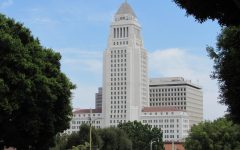
Today the latest chapter unfolds in plain sight at City Hall. The Los Angeles Charter Reform Commission voted 9-2 in late February to advance language that would effectively eliminate the independently elected City Controller’s office, shifting its core functions—audits, accounting, payment processing, revenue forecasting, and fraud investigations—to a new Chief Financial Officer appointed by Mayor Karen Bass and accountable to the City Council. The Commission transmitted its final report to City Council on April 2, 2026, with proposals headed toward the November 2026 ballot. Proponents call it modernization. I call it what it is: a power grab dressed up in bureaucratic clothing. And it conveniently arrives at the precise moment when federal investigators led by Vice President JD Vance and independent voices like Nick Shirley are shining floodlights on the kind of waste and fraud that has thrived in the shadows of one-party California.
Follow the Ledger
Let me be clear from the outset: I am not a partisan attack dog. I am a financial practitioner with three decades managing private wealth and structuring private equity deals, private credit facilities, and real estate investments. I have testified as an expert witness in federal and state courts on fiduciary duty, securities law, and business disputes. When I review a ledger, I look for the same patterns any competent auditor would spot. In Los Angeles, those patterns have grown impossible to ignore.
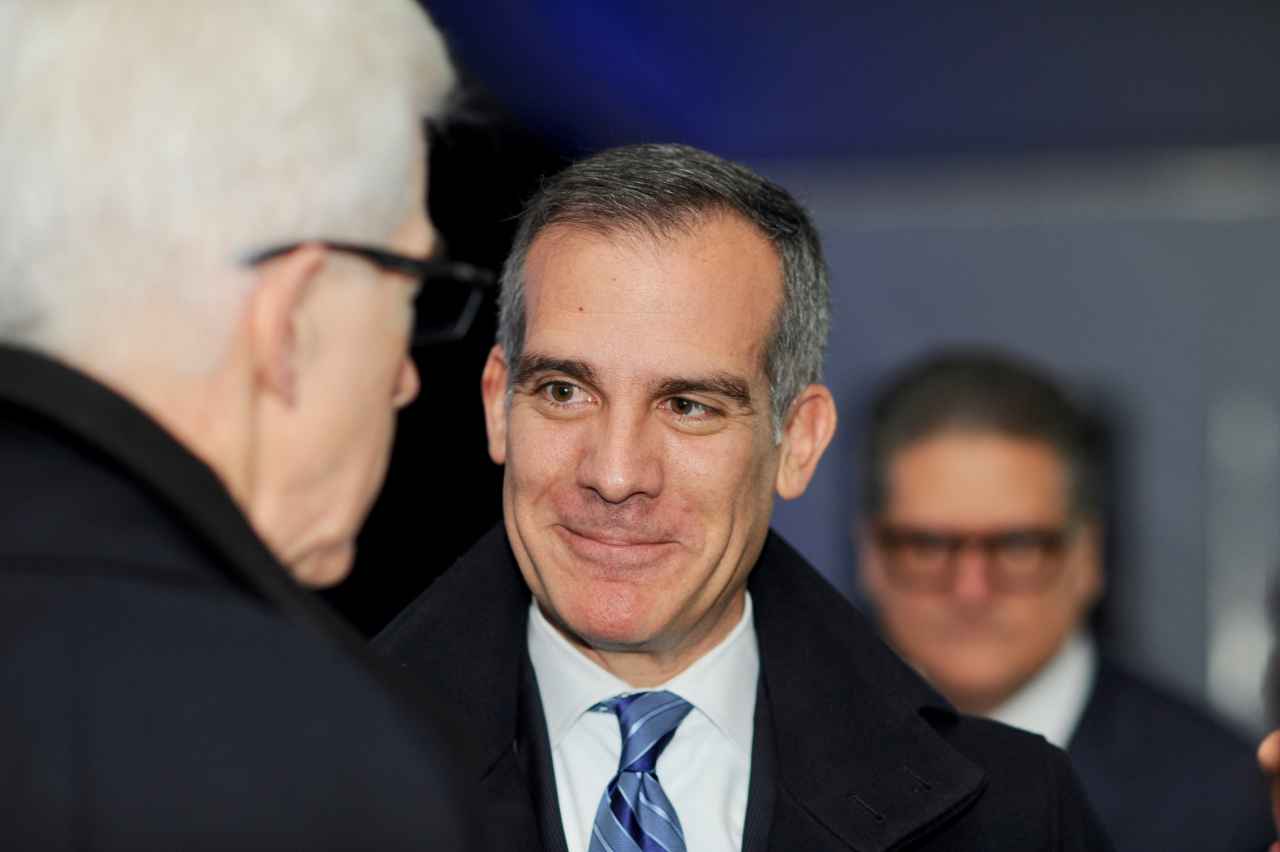
Controller Kenneth Mejia has described the charter proposal as an attempt to “decimate” his office and remove the last meaningful check on homeless-service spending and departmental accountability. He is not exaggerating. His office has been stripped of 27 positions through budget cuts tied directly to last year’s $1 billion city budget deficit—cuts that happened, conveniently, while Mejia was actively exposing financial mismanagement citywide.
Consider the numbers already on the table. In fiscal year 2025–26, Los Angeles had roughly $1.1 billion available for homelessness programs once carryover funds and appropriations were tallied. It spent only $516 million and encumbered another $119 million. Nearly half a billion dollars simply sat unspent. That’s not just a rounding error, that’s real money extracted from taxpayers who were promised results. Before Mejia’s team built the tracking dashboards, the city literally did not monitor homelessness spending in any systematic way. Think about that for a moment: a city that lectures the rest of America about compassion could not be bothered to count where the compassion money actually went.
Now imagine what happens when the last independent auditor is folded into the mayor’s office. The same people who failed to spend the money will suddenly be in charge of telling the public how well they spent it. The fox does not guard the henhouse in that scenario. The fox becomes the accountant, the paymaster, and the PR department all at once.
Defending the Indefensible
The proposal’s defenders insist this is merely charter modernization. They point to the City Administrative Officer and argue that a unified CFO role would bring clearer budget leadership. I have spent my career in rooms where real money changes hands. I know what “clearer leadership” actually means in this context: decisions about audits, fraud probes, and waste investigations will be made by political appointees who owe their jobs to the same elected officials whose departments they are supposed to scrutinize. In a city that has operated under unbroken Democratic control for decades, the outcome is predictable. Oversight becomes optional. Accountability becomes a suggestion. The public, as usual, pays the bill.
Congressman Kevin Kiley (R-CA) requested a Government Accountability Office report in February 2026 to quantify California’s fraud since 2016, estimating billions across housing and healthcare sectors. He cited a $50 million homelessness scheme in Los Angeles as emblematic of the problem, alongside $370 million diverted from the California Cannabis Tax Fund for purposes wholly unrelated to substance abuse prevention. Meanwhile, $24 billion in homelessness spending from 2019 to 2024 has produced no measurable reduction in street encampments—a figure that Nick Shirley raised before Congress during his January 21, 2026 House Judiciary Subcommittee testimony, warning that California’s fraud problem could dwarf Minnesota’s.
Operation Never Say Die
This is not theoretical. The hospice sector offers a window into what systemic fraud looks like when accountability is absent. On April 2, 2026, federal authorities announced Operation Never Say Die, a coordinated takedown that resulted in eight arrests and charges against 15 defendants across nine separate Southern California healthcare fraud investigations. The schemes were brazen. Defendants enrolled healthy individuals as hospice patients, paid them kickbacks as low as $300 per month in cash, and billed Medicare for end-of-life care services that were either medically unnecessary or never provided at all. One facility, the Glendale-based 626 Hospice Inc., operating as St. Francis Palliative Care—had a 97% survival rate among its supposedly terminal patients. Another Anaheim-based operation posted an 85% non-death discharge rate, nearly five times the national average. Taxpayer losses exceeded $50 million in this sweep alone.
The scale of the problem is staggering. More than 700 of approximately 1,800 hospice providers in Los Angeles County have triggered multiple fraud red flags as defined by state auditors—excessive billing, patients shared across facilities, and terminal patients who were later discharged alive. California has revoked more than 280 hospice licenses and placed an additional 300 providers under investigation. One office plaza in Los Angeles County houses 89 registered hospice companies, a statistical impossibility for any legitimate healthcare operation. CMS Administrator Dr. Mehmet Oz put it bluntly: “Nationwide, we have just over 6,000 hospices, so why would almost one-third of all the hospices in the whole country be in Los Angeles County?”
The operation was coordinated with Vice President Vance’s Task Force to Eliminate Fraud, launched by executive order on March 16, 2026. Since its inception, the task force has suspended 221 hospice and home health providers in Los Angeles alone, a 215% increase in a single week. First Assistant U.S. Attorney Bill Essayli called California the “Kingdom of Fraud” during the April 2 press conference, adding: “You have hundreds of billions of dollars in fraud. If you look at the EBT fraud, the SNAP benefits fraud, the hospice fraud, the homeless fraud—one thing is in common: No vetting, no checking. Money goes out the door with no questions asked, no receipts, no checking up on them.”
The Homeless Industrial Complex
The homelessness funding apparatus operates on the same principle. Billions of federal, state, and local dollars have been funneled into programs with little measurable reduction in street encampments. Mejia’s own reports document massive underspending alongside persistent waste. Vendors have been caught overbilling. Audits have exposed weak internal controls. Yet the political class that presides over this system continues to demand more money while resisting structural oversight.
In my work as an expert witness, I have reviewed plenty of ledgers that looked pristine on the surface and rotten underneath. The common thread is always the same: when the people writing the checks also control the auditors, the books stay clean by design. The charter proposal before voters this November would institutionalize exactly that arrangement.
Just weeks before Operation Never Say Die, Mejia’s office had played a significant role in exposing a $23 million homelessness funding fraud scheme that led to the arrest of a Westwood man charged with defrauding taxpayer funds intended for homeless services. That arrest happened because an independent watchdog was doing its job. The charter reform proposal would eliminate the independence that made that investigation possible.
One-Party Rule and Its Consequences
This proposal is the logical endpoint of single-party rule in California. I arrived here when the state still had competitive elections and a thriving middle class. I watched the Republican Party shrink to irrelevance while the Democratic machine consolidated power at every level of government. Term limits were supposed to bring fresh blood. Instead, they produced a permanent class of consultants, union bosses, and nonprofit executives rotating through the revolving door between public office and private enrichment.
The pattern is not new. In 2012, Governor Jerry Brown proposed his own 12-point pension reform plan, and Senate Republicans stepped up to support it. SB 1176 and Senate Constitutional Amendment 18 incorporated Brown’s plan and were positioned for a floor vote that would have sent the reforms to the November ballot. Republican leaders including Bob Huff, Doug LaMalfa, Bill Emmerson, Tom Harman, Mimi Walters, and Anthony Cannella backed the measures and demanded open debate. Huff said plainly: “You had an opportunity to bring the governor’s public pension reform plan to the Senate floor, to debate it in the open, and you said no.” LaMalfa reminded colleagues that voters in San Jose and San Diego had just approved their own pension reforms by wide margins. The Democratic supermajority refused a vote, kept negotiations behind closed doors, excluded Republican input, and let the bills die on the deadline.
That pattern has repeated for more than a decade. One-party control does not just block reform, it makes reform structurally impossible, even when the governor of the same party wants it. The network of bureaucrats, contractors, and political donors who benefit from the status quo have every incentive to keep the money flowing and the questions to a minimum. Hand that network the last set of financial oversight keys and you have not modernized city government. You have surrendered it.
The Fix
The solution is not more studies or task forces. It is structural sunlight. Voters must reject this charter amendment when it reaches the November ballot. The Controller must retain full independence, be designated the city’s CFO with an independent budget, and be given clear authority over audits and fraud investigations—exactly as Mejia himself has proposed. Beyond Los Angeles, California needs aggressive federal oversight. Vance’s fraud task force should treat this state the way it treated Minneapolis. Every dollar of federal homelessness and healthcare funding should come with real-time tracking, mandatory third-party audits, and automatic clawbacks for unspent or misspent amounts. Political donations from entities receiving public contracts need stricter disclosure and conflict-of-interest enforcement.
I have coached youth track and rugby for a long time. I have watched young men learn that shortcuts on the field lead to turnovers and losses. The same principle holds in government. You do not strengthen accountability by eliminating the referees. You strengthen it by making sure the referees answer to the fans, not the players.
The inconvenient truth is that fraud has been hiding in plain sight in Los Angeles. One hospice facility in Glendale was enrolling people who were not dying, billing Medicare for their imaginary end-of-life care, and running a 97% survival rate—for years—until federal agents finally showed up with warrants. Now City Hall wants to eliminate the one office that might have caught it sooner. The time to stop that is before another half-billion dollars disappears into the same black hole.


- Sacramento Flunks Civics Again - October 19, 2026
- Class President by Appointment - October 14, 2026
- Fewer Kids, More Payroll: LAUSD’s Math Problem - October 11, 2026
RELATED ARTICLES
-
 September 19, 2018
 -
-
 November 20, 2024
Good article, thank you. Your analogies are spot on. The tax payer money that has been stolen in this state is staggering. How do we go about repairing these issues in California Tho? The very first thing, I believe, is to repair the election process. The second thing is DO NOT vote For Democrats and third is More Oversight not less. Seems obvious right? But the low information voters in this state, that have always voted for Democrats, will continue to vote for Democrats. Voting for their own demise. It’s easier to get your 15 second news flash from your co worker that has TDS than it is to do the research to get the truth. I could, and I will, show this article to the handful of Democrats that I know and to a person they will insist this is fake news. Won’t even read it. It’s sad and frustrating. One can only hope and pray that someday, someone can break the strangle hold these grifters called Democrats can be broken and turn this state into a place people WANT to live in, instead of a state they have to leave to survive. Again, thank you.
we need just a handful of influential people with a large under-40 audience to drive home the impact of this fraud by personalizing it: the One party rule of the Democrat mafia has stolen and wasted 435 billion+. That’s 17k each from the approx 25 million CA taxpayers. let’s start a tiktok trend. what would you buy with $17k? A new car? New furniture? vote GOP up and down the ticket and let’s start cracking down on this fraud and refunding the taxpayers as we strip away all of this waste!